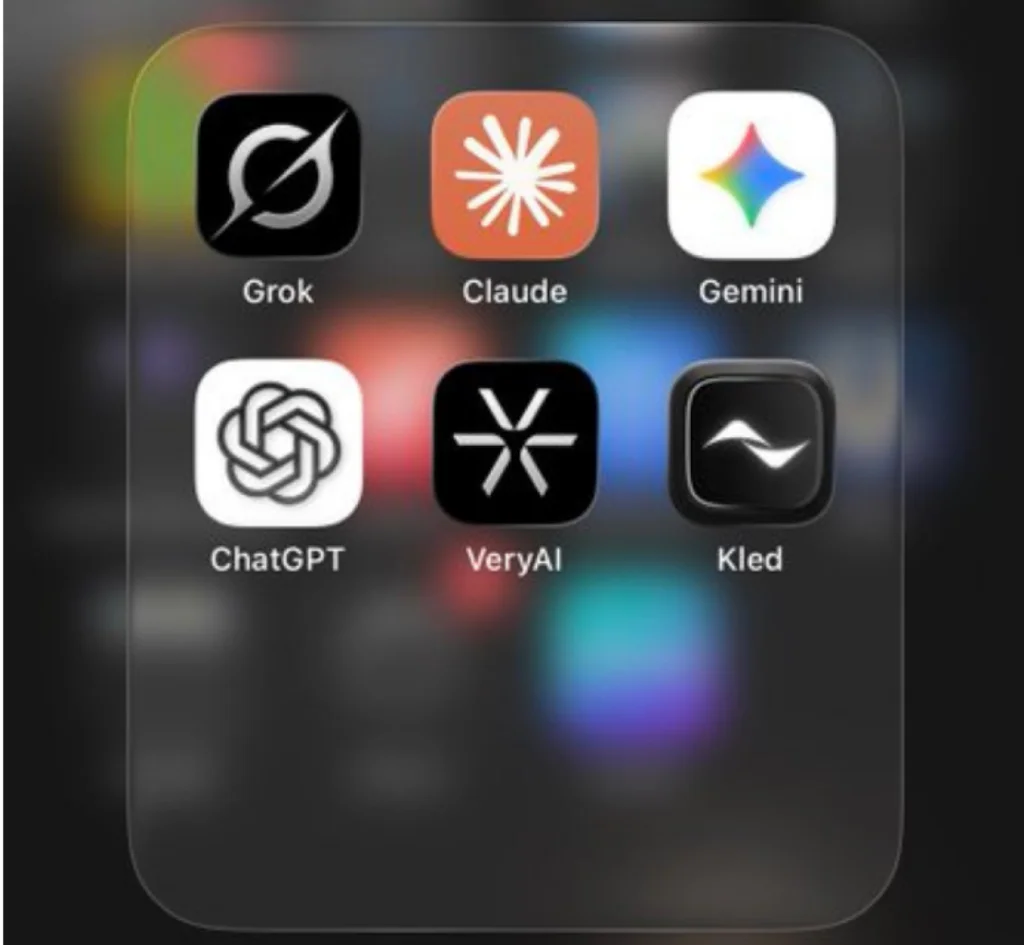
A foreign tech founder, Avi Patel, has triggered a wave of anger and debate among Nigerians after announcing that his company removed its app, Kled, from Nigeria’s App Store and blocked access from the country over alleged widespread fraud.
In a lengthy statement posted on X, Patel said bluntly: “We have removed Kled from the Nigerian app store and IP banned the entire region.”
While attempting to soften the blow, he added, “The first thing I would like to say is I have nothing against Nigeria… these were some of our earliest app adopters. Genuinely, thank you all for the support.”
Kled, an AI-driven data marketplace that pays users for uploading images, videos, and documents used in training artificial intelligence systems, had only been operational for about four months. Despite its short lifespan, Patel claimed the platform recorded massive participation globally, with “over 1 billion assets” uploaded and “hundreds of thousands of people” paid.
However, Nigeria, according to him, stood out for the wrong reasons.
“After several months of uploads we found that Nigeria had a ≈95% fraud rate,” Patel wrote, alleging that the majority of submissions were unusable.
“Instead of real, usable data, users were uploading pictures of black screens, duplicate photos, internet generated images, AI generated images… at an unimaginable scale.”
He contrasted this with other countries, stating: “Malaysia, Indonesia, and the Philippines have a less than 10% fraud rate across 10x the userbase size.”
The situation, he said, escalated dramatically when the platform’s identity verification system was overwhelmed.
“This weekend we were flooded with thousands of fake Japanese passports and identity cards with Nigerians photoshopped onto them in our KYC system. That was the final straw.”
According to Patel, the company’s fraud detection system was capable but increasingly strained.
“Our fraud system is fast to catch these issues but the level of complexity of these schemes is getting out of hand,” he said.
He stressed that the decision was driven by business survival, not prejudice.
“As a startup we can’t afford to eat the costs of that data overhead,” Patel explained, adding that the removal was temporary: “We hope to return when the time is right.”
In a follow-up post, Patel doubled down amid mounting criticism, insisting:
“This is very clearly NOT a marketing stunt… why would we ban a region from the app store and then market to that same region?”
He also attempted to dispel misinformation about the app, clarifying:
“Kled is ONLY available on iOS, not on Android,” and warned users about a fake version circulating online.
Providing more figures, he revealed:
“Kled had over 25,000 users in Nigeria alone… across a 10 million upload sample from this region, 94.2% was fraudulent.”
He added that even a lower fraud level might have been tolerable:
“If the fraud rate was even 50%, we… would have chosen to keep Kled on the Nigeria App Store, but 95% is too much.”
Patel further emphasized that Nigeria was singled out:
“Kled has only been banned in Nigeria. It is available EVERYWHERE else in Africa.”
The remarks, however, sparked immediate backlash across Nigerian social media, with many users accusing the founder of generalisation, racism, and exploiting negative stereotypes about the country.
One user, Bellinie, rejected the claims outright, writing, “Nobody in Nigeria knows your app… nice marketing scheme only a fool will fall for this.”
Another user, Boop, reacted angrily: “So you’re blacklisting the people that actually need it… just say you hate the African community—you’re a racist.”
A user identified as Teabags raised concerns about trust and privacy, warning: “It is a very bad thing to put your users’ details out like that… I hope your project begins to lose relevance.”
Still, some Nigerians took a different stance, arguing that the controversy highlights a deeper issue. A commenter known as “God’s own” wrote:
“Nigerians will swear that it’s politicians only spoiling the Nigeria and the Nigerian brand… meanwhile the average Nigerian… is doing the exact same thing.”
Others expressed disappointment rather than anger. One contributor said, “As a Nigerian contributor myself, this is sad. I love Kled and what you guys do.”
Despite the backlash, Patel maintained his position, criticizing what he described as emotionally driven reactions.
“Extremely emotionally charged response for a very fair business decision that has 0 racial motivation,” he said, urging critics to “respect our choices.”