The Advocacy Intelligence and Development Partners (AIDP) has warned Nigerians to reject what it describes as a “false salvation” a reported plan by U.S. President Donald Trump to intervene militarily in Northern Nigeria under the guise of ending “genocide against Christians.”
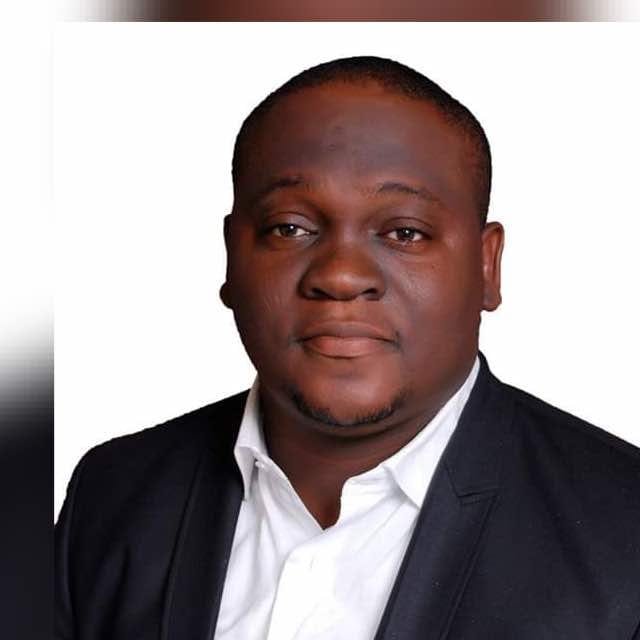
In a strongly worded statement titled “America’s False Salvation: Why Nigerians Must Reject Trump’s Planned Religious Intervention in Northern Nigeria,” AIDP’s Convener, Osabinu Olufemi, described the move as “a pot of poison and not porridge,” calling it a disguised attempt at re-colonization through religious manipulation.
“This plan, cloaked in humanitarian language, is nothing short of a poisonous pot of porridge, spiced with hypocrisy and served on the platter of neo-colonial ambition,” Olufemi stated. “It represents what can best be described as a second slavery.”
AIDP said the proposed intervention ignores the history and complexities of Nigeria’s security situation. The group traced the rise of Boko Haram from its founding in 2002 by Mohammed Yusuf to its violent insurgency under Abubakar Shekau following Yusuf’s death in 2009.
According to the statement, Boko Haram’s reign of terror between 2010 and 2015 claimed tens of thousands of lives and displaced millions. Despite minimal international support, Nigeria’s military, it said, “fought alone and prevailed.”
By 2016, internal divisions split the insurgent group into Boko Haram and Islamic State West Africa Province (ISWAP). With sustained operations such as Lafiya Dole, Hadin Kai, and Desert Sanity, Nigeria’s armed forces reclaimed most territories once under terrorist control.
“The Boko Haram that once held over 20 local governments now exists as scattered cells hiding in forests and borders,” AIDP noted, citing a 70% decline in terrorism-related deaths according to the 2024 Global Terrorism Index.
The group hailed Nigeria’s military for achieving what it described as “unprecedented indigenous victories,” including reclaiming territories, restoring displaced persons, and rebuilding communities.
“Our victory, though incomplete, is organic and Nigerian-made,” the statement read. “We should not allow outsiders to hijack our progress or rewrite our history.”
AIDP drew parallels with U.S. interventions in Afghanistan, Iraq, Libya, and Somalia, arguing that such operations historically led to instability rather than peace.
“Everywhere America has intervened under the banner of freedom, destruction has followed. Nigeria must not become another casualty of false humanitarianism,” the group warned.
The group accused Trump of exploiting religion for political gain, dismissing his claim of Christian persecution in Nigeria as “false and inflammatory.”
“Boko Haram and ISWAP have killed Muslims and Christians alike. The majority of victims were Muslims who resisted their ideology,” Olufemi said. “Trump’s narrative is divisive and dangerous, capable of tearing communities apart.”
AIDP suggested that Trump’s renewed interest in Northern Nigeria may be economically motivated, given Nigeria’s improving fiscal indicators and its expanding mineral and energy potential.
The group noted that Nigeria’s economy is regaining momentum, with the naira stabilizing, oil output improving, and major investments from China, the EU, and the UAE reshaping the country’s economic landscape.
“Trump’s sudden concern for Northern Christians may be a smokescreen for strategic and economic espionage,” AIDP alleged, warning that “foreign intervention is rarely about humanity but about control.”
Urging Nigerians to resist religious polarization, the group called for collective vigilance and renewed faith in the country’s institutions.
“Boko Haram’s bullets never asked for religion before killing,” the statement said. “The war against terror is ours — and ours alone to finish.”
AIDP concluded by warning that accepting any foreign-led religious intervention could undermine Nigeria’s sovereignty and unity.
“Donald Trump’s proposed intervention is a joke taken too far — a dangerous ploy designed to destabilize our unity and halt our progress,” Olufemi said. “Nigeria will never again be recolonized — not by guns, not by dollars, and certainly not by deceit.”
The group reaffirmed confidence in Nigeria’s armed forces and institutions, insisting that the nation’s security and future must remain “in Nigerian hands.”