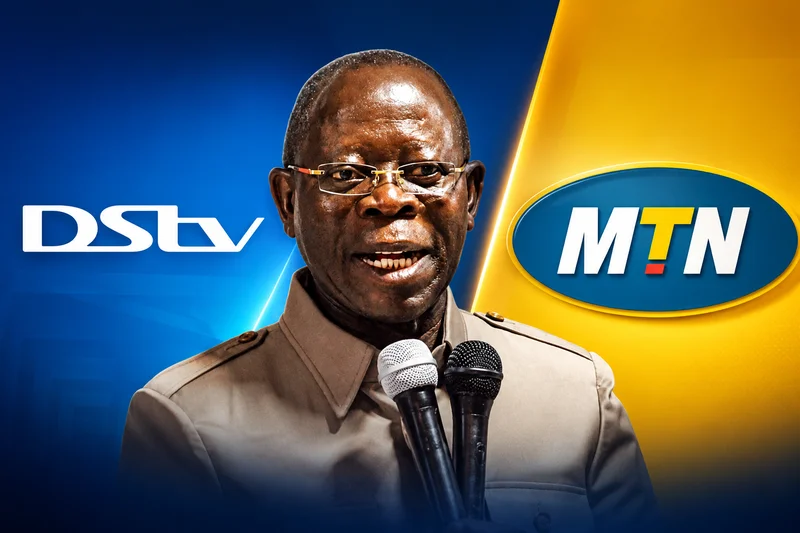
Lawmakers in the Senate have intensified calls for decisive action against rising xenophobic attacks on Nigerians in South Africa, with Senator Adams Oshiomhole urging the Federal Government to consider revoking the operating licences of South African companies in Nigeria, including MTN Nigeria and MultiChoice Group.
The demand comes amid growing concern in the National Assembly over the safety of Nigerians living in South Africa, following reports of renewed violence targeting foreign nationals.
Speaking during Plenary, Oshiomhole said Nigeria must adopt a firm and strategic response to protect its citizens, stressing that the country should not limit its reaction to expressions of sympathy.
“I don’t want this Senate to be shedding tears, to sympathize with those who have died. We didn’t come here to share tears,” he said.
He argued that international relations should reflect mutual respect and fairness, adding, “If you hit me, I’ll hit you. I think it is appropriate in diplomacy. It’s an economic struggle.”
The Edo North Lawmaker proposed that Nigeria should take stronger economic measures, including the possible nationalization of MTN and withdrawal of its operating licence, noting that the company generates significant revenue from Nigeria.
According to him, such steps would not only serve as a response to the treatment of Nigerians abroad but also create opportunities for indigenous businesses to thrive.
He also extended the call to DSTV, alleging that the pay-TV operator engages in practices that disadvantage Nigerian consumers and economy.
“I call on the Federal Government to revoke DSTV, which is also a South African company that is cutting away millions of Dollars,” he said.
Oshiomhole linked the current wave of hostility to internal political developments in South Africa, suggesting that anti-immigrant sentiments have become part of domestic narratives, thereby affecting Nigerians and other foreign nationals.
He maintained that Nigerians residing in South Africa are economically active and contribute meaningfully to the host country’s economy.
“These Nigerians who are in South Africa, they are not there on holiday. They are there to work and to earn,” he said, adding that a stronger stance by Nigeria could compel South African authorities to act more responsibly.
Also contributing to the debate, Senator Victor Umeh described the situation as deeply troubling, warning that many Nigerians in South Africa are now living in fear.
“It is worrisome… they are hiding for their lives, they can’t move freely. This is a situation where people are paying good with evil,” he said, referencing Nigeria’s historical support during the anti-apartheid struggle.
Umeh further called on the African Union to intervene, urging the body to impose sanctions if necessary to curb the attacks.
Meanwhile, the House of Representatives also condemned the violence, calling on the Federal Government to take urgent diplomatic and protective steps to safeguard Nigerians abroad.
The renewed debate highlights mounting pressure on authorities to move beyond condemnation and adopt concrete measures, including economic and diplomatic strategies, to address recurring xenophobic violence against Nigerians in South Africa.