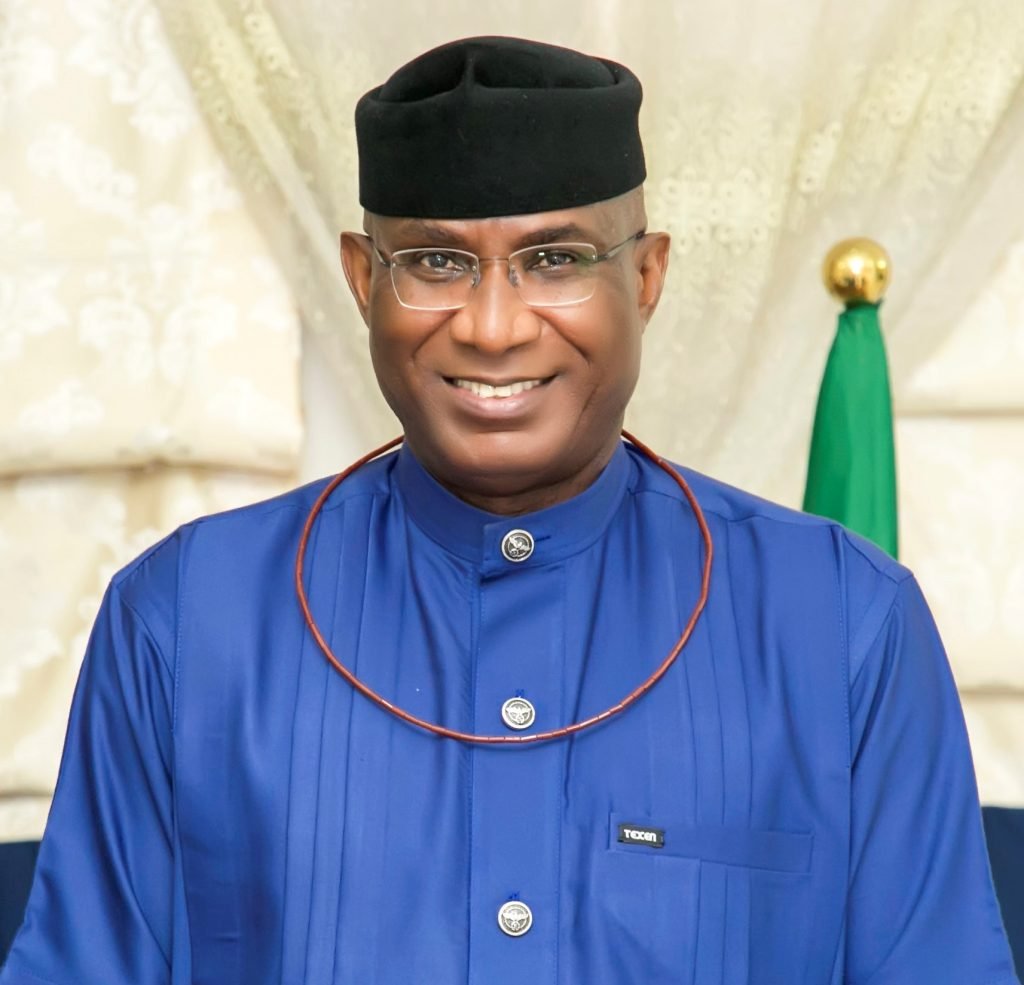
Former Deputy Senate President, Ovie Omo-Agege, has thrown down the gauntlet in the battle for Delta Central in the 2027 election, declaring that he will reclaim the senatorial seat from his erstwhile protégé, Ede Dafinone, by riding on the emotional goodwill of his years of service in the National Assembly.
In a bold declaration that signals the opening of what promises to be a fierce political contest ahead of the 2027 elections, Omo-Agege said his return bid is anchored on what he described as his “proven record” during his two stints in the Senate between 2015 and 2023.
“This is not a light decision,” he said, framing his comeback as a response to what he called overwhelming pressure from constituents across the eight Local Government Areas of Delta Central.
But beyond the formal declaration, insiders say the real message is clear: Omo-Agege is banking on memory, legacy, and emotion to retake the seat he once dominated.
Playing The Legacy Card
At the heart of his campaign is a deliberate effort to remind voters of what he portrays as the “golden years” of his representation.
From attracting a Federal Polytechnic and a National Defence Space School to facilitating a Federal University of Medical and Health Sciences in Kwale, Omo-Agege reeled out a catalogue of projects he insists transformed Delta Central’s visibility at the national level.
He also pointed to a string of grassroots interventions—healthcare centres, school upgrades, ICT hubs, electrification projects, and empowerment schemes—as evidence of what he called “true representative partnership.”
To his supporters, these are not just projects, they are emotional anchors.
To his critics, however, they are old achievements being recycled for a new battle.
The Dafinone Factor
Though he stopped short of directly attacking Senator Dafinone, the undertone of his message was unmistakable.
Omo-Agege repeatedly warned against what he described as “silent” or “insipid” representation, insisting that Delta Central needs a voice that is “strategic, purposeful, and authoritative,” from 2027 in the Senate.
Political observers say the remark is a thinly veiled swipe at Dafinone, whose emergence many trace back to Omo-Agege’s political machinery.
Now, the former mentor appears ready to test that structure and dismantle it if necessary.
Emotion As Strategy
Perhaps the most striking element of Omo-Agege’s declaration for the Delta Central Senate seat in 2027 is his appeal to sentiment.
Framing his decision as both a divine calling and a collective mandate, he said:
“Having sought the face of our Lord Jesus Christ in prayer, I have concluded that service to my people is a divine duty.”
The language, analysts note, is designed to resonate deeply with grassroots voters, blending faith, nostalgia, and a sense of unfinished business.
Delta Central 2027: More Than A Senate Seat For Omo-Agege
Omo-Agege also tied his ambition to broader national politics, pledging unflinching support for Bola Ahmed Tinubu and his Renewed Hope Agenda.
He argued that continuity at the centre would unlock more opportunities for Delta Central, particularly given its oil and gas significance.
“Supporting President Tinubu in 2027 is non-negotiable,” he declared.
Battle Lines Drawn
With his declaration, the race for Delta Central has effectively begun.
For Omo-Agege, the strategy is clear: reconnect with the people, revive memories of his influence, and present himself as the tested hand capable of delivering results.
But whether that emotional pull will be enough to unseat a sitting Senator and a former ally remains the defining question.
One thing, however, is certain: Delta Central is heading for a high-stakes political showdown where loyalty, legacy, and power will collide.