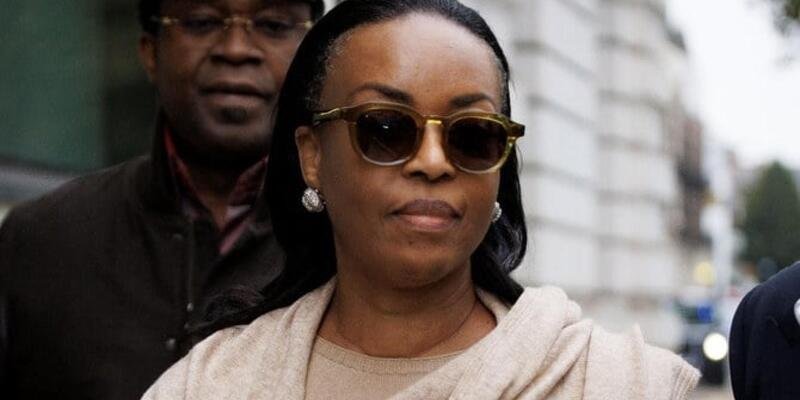
The jury in the ongoing bribery trial involving former Nigerian Minister of Petroleum Resources, Diezani Alison-Madueke, has commenced deliberations after nearly four months of proceedings at Southwark Crown Court in London.
Prosecutors allege that the former Minister enjoyed an extravagant lifestyle funded by oil executives seeking access to lucrative petroleum contracts during her tenure in office.
Alison-Madueke, who served under former President Goodluck Jonathan from 2010 to 2015 and later became the first female President of the Organization of the Petroleum Exporting Countries (OPEC), has denied all allegations against her. She faces five counts of accepting bribes and one count of conspiracy to commit bribery.
The 65-year-old former Minister is accused of receiving a range of luxury benefits allegedly financed by businessmen linked to Nigeria’s oil industry. These include high-end properties in London, luxury shopping trips, chauffeur-driven vehicles, private jet travel, and other expensive gifts.
The jury was sent to begin deliberations shortly before 11:30 a.m. on Monday after months of testimony, heated cross-examinations, and dramatic courtroom revelations involving Alison-Madueke and her co-defendants.
Also standing trial are oil executive Olatimbo Ayinde, 54, who faces bribery-related charges connected to Alison-Madueke, and her brother, Doye Agama, 69, who is accused of conspiracy to commit bribery in relation to a church project. Both men have pleaded not guilty.
While testifying during the trial, Alison-Madueke repeatedly denied ever soliciting or accepting bribes, insisting that all actions she took as Petroleum Minister were based on official procedures and recommendations.
“At no time did I ask, take, or seek a bribe or bribes of any sort,” she told the Court during her testimony last month.
However, prosecutors presented a sharply contrasting narrative, portraying her as the central figure in a sophisticated corruption network built around Nigeria’s oil wealth.
MJConcept TV News previously reported on April 28, 2026, that the case intensified when lead prosecutor Alexandra Healy KC directly accused Alison-Madueke of misleading the jury during a tense cross-examination session.
Standing just a short distance from the witness stand, Healy KC challenged the former Minister’s claims that she played only a limited procedural role in awarding oil contracts.
Instead, prosecutors described Alison-Madueke as the “General” of an alleged bribery scheme in which oil executives lavished her with luxury gifts and privileges in exchange for influence and access within the petroleum sector.
One of the major areas of contention during the trial involved allegations surrounding luxury shopping trips at Harrods in London.
Alison-Madueke claimed she had never seen many of the costly items allegedly purchased in her name and denied knowing who paid for them.
But prosecutors countered with testimony from Harrods employees, who reportedly described her as a regular and fashionable customer with a personal shopper familiar with her preferences.
“You are not telling the truth. You knew exactly who was paying, and you knew exactly why,” Healy KC told the former minister during cross-examination.
The Court also heard details of messages allegedly retrieved from Alison-Madueke’s phone, including threats purportedly directed at oil businessmen Kola Aluko and Jide Omokore during a confrontation in 2014.
According to prosecutors, Alison-Madueke allegedly stated:
“I will be happy to escort all of you to jail along with myself. Let us see who survives, me or you. If you don’t do what I say, we all go down together.”
“I have reached the stage where I don’t care anymore.”
The prosecution argued that the messages contradicted Alison-Madueke’s claims that she had been blackmailed by oil magnate Kola Aluko and feared for her safety.
Instead, prosecutors claimed the messages portrayed a woman firmly in control and issuing threats as investigations into the alleged corruption scheme intensified.
Healy KC dismissed the blackmail narrative as a fabricated attempt to cast the former minister as a victim rather than an active participant in the alleged bribery operation.
Prosecutors also rejected Alison-Madueke’s explanation that documents proving she reimbursed some expenses were lost during raids carried out by Nigeria’s Economic and Financial Crimes Commission (EFCC).
The prosecution described the claim as a “convenient fiction” aimed at explaining the absence of evidence showing she repaid the alleged benefits.
Throughout the trial, jurors heard evidence suggesting that certain oil executives referred to themselves in internal communications as Alison-Madueke’s “true soldiers,” while prosecutors maintained that oil contracts were exchanged for personal luxury and financial benefits.
The case has attracted significant attention both within Nigeria and internationally due to Alison-Madueke’s former influence over Africa’s largest oil-producing industry and the longstanding corruption allegations surrounding her time in office.
After months of dramatic courtroom proceedings and damaging testimony, the jury will now determine whether Alison-Madueke and her co-defendants are guilty or innocent of the charges brought against them.